
Эфир целлюлозы
Hydroxypropyl Methyl Cellulose
A non-ionic cellulose ether used mainly for water retention and thickening, improving workability and open time.
Nonionic cellulose ether for tile adhesive, putty and mortar - thickens, retains water and improves adhesion.
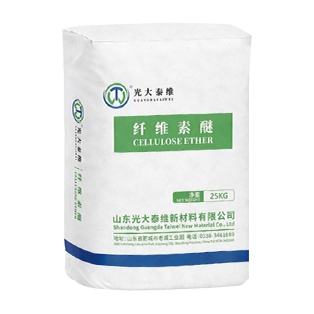
- Упаковка
- 25 kg net per bag, sealed for transport and storage.
- Хранение
- Store cool, dry and sealed, away from moisture and direct sunlight. Keep away from acids and alkalis; reseal opened bags. Recommended use within 24 months.
Подробнее о продукте
Product overview
Hydroxypropyl methyl cellulose (HPMC) is a non-ionic, water-soluble polymer made by etherifying natural cellulose. In dry-mix mortars its main roles are water retention and thickening.
Main uses
Tile adhesives, rendering mortars, self-levelling compounds, wall putty, gypsum-based mortars and insulation mortars.
What it solves
- Water retention: less early water loss, so less cracking, dusting and low strength from fast drying
- Sag resistance for vertical application
- Workability: smoother trowelling and longer open time
- Compatibility with cement, gypsum and redispersible powder systems
Choosing a grade
Viscosity grade and dosage depend on mortar type, application method and local climate. Tell us the application and we will help you confirm the right grade.
Характеристики
- Appearance
- White or almost white powder
- Hydroxypropyl content (%)
- 8 - 12
- Methoxy content (%)
- ≥25 (60GD) / 19 - 21 (75GD)
- Moisture (%)
- ≤5.0
- Ash (%)
- ≤5.0
- Viscosity (mPa·s)
- 5 - 200000
- Gel temperature (°C)
- 56 - 64 (60GD) / 68 - 90 (75GD)
- Light transmittance (%)
- ≥70
- Whiteness (%)
- ≥75
- Packing density (g/l)
- 370 - 420
- pH value
- 7.0 - 9.0
- Packing
- 25 kg net per bag
Запрос коммерческого предложения
Укажите продукт, количество и порт назначения — мы ответим с ценой и сроком поставки. Образцы предоставляются по запросу.
Технические данные
Ключевые свойства
- Disperses readily in cold water without lumping, which shortens mixing time and gives a smooth, uniform slurry.
- Good thickening effect: raises mortar viscosity and consistency even at low dosage, improving anti-sag behaviour.
- Good compatibility and system stability with cement, gypsum and common dry-mix additives.
- Good emulsification and foam stability, helping keep emulsions and suspensions evenly dispersed.
- Strong water retention: slows water loss so mortar keeps workability, open time and cement hydration.
- Acts as binder and film former, improving adhesion strength, flexibility and durability of the cured mortar.
- Nonionic cellulose ether made from refined cotton; soluble in cold water and stable in alkaline cement systems.
- Prevents fresh mortar from slipping or sagging on vertical surfaces and keeps fillers and pigments evenly distributed.
Применение
- Tile adhesive for ceramic and stone tiles
- Interior and exterior wall putty powder
- Plastering mortar and gypsum-based plaster
- External insulation and finishing systems (EIFS)
- Self-leveling mortar and grouting materials
- Thermal insulation mortar and cement mortar
- Emulsion-based caulking agents and adhesives
- Detergent, hand soap and home care formulations
Марки и области применения
| Марка | Свойства | Рекомендуемое применение |
|---|---|---|
| 260 - 480 mPa·s | Low viscosity | Self-leveling mortar, grouting material and duct grouting material |
| 40000 - 55000 mPa·s | Medium viscosity | Gypsum, putty and gypsum-based building materials |
| 60000 - 80000 mPa·s | Medium-high viscosity | Lightweight gypsum, putty, tile adhesive, concrete adhesive and gypsum |
| 90000 - 110000 mPa·s | Medium-high viscosity | Interior and exterior wall putty powder, grout plaster and tile adhesive |
| 140000 - 160000 mPa·s | High viscosity | Cement mortar, thermal insulation mortar and clay |
| 180000 - 200000 mPa·s | High viscosity | Cement mortar, thermal insulation mortar and clay |
| 40000 - 50000 mPa·s | Medium viscosity, emulsion type | Glue and emulsion-based caulking agent |
| 65000 - 75000 mPa·s | Medium viscosity, emulsion type | Emulsion-based tile adhesive |
| 90000 - 110000 mPa·s | Detergent grade | Detergent |
| 180000 - 200000 mPa·s | Detergent grade | Detergent |
Дозировка и применение
- 01Typical dosage is 0.05% - 0.5% by weight of the total dry mortar powder; start at the low end and adjust for the target consistency.
- 02The right viscosity grade and dosage depend on the mortar type, application method and local climate, so confirm both in a trial batch before production.
- 03Premix with the other dry components until uniform, then add water under stirring; avoid dropping the powder into still water in one lump.
- 04Dissolving is faster in cold water with moderate shear; excessive shear or long mixing can entrain air and lower the mortar density.
- 05Run a small trial batch when changing the viscosity grade, the cellulose ether dosage or the raw material source.